
Replacing a roof in Los Angeles requires careful attention to city regulations and permit requirements. Many homeowners wonder if they can skip the permitting process to save time and money, but this decision can lead to serious consequences down the road.
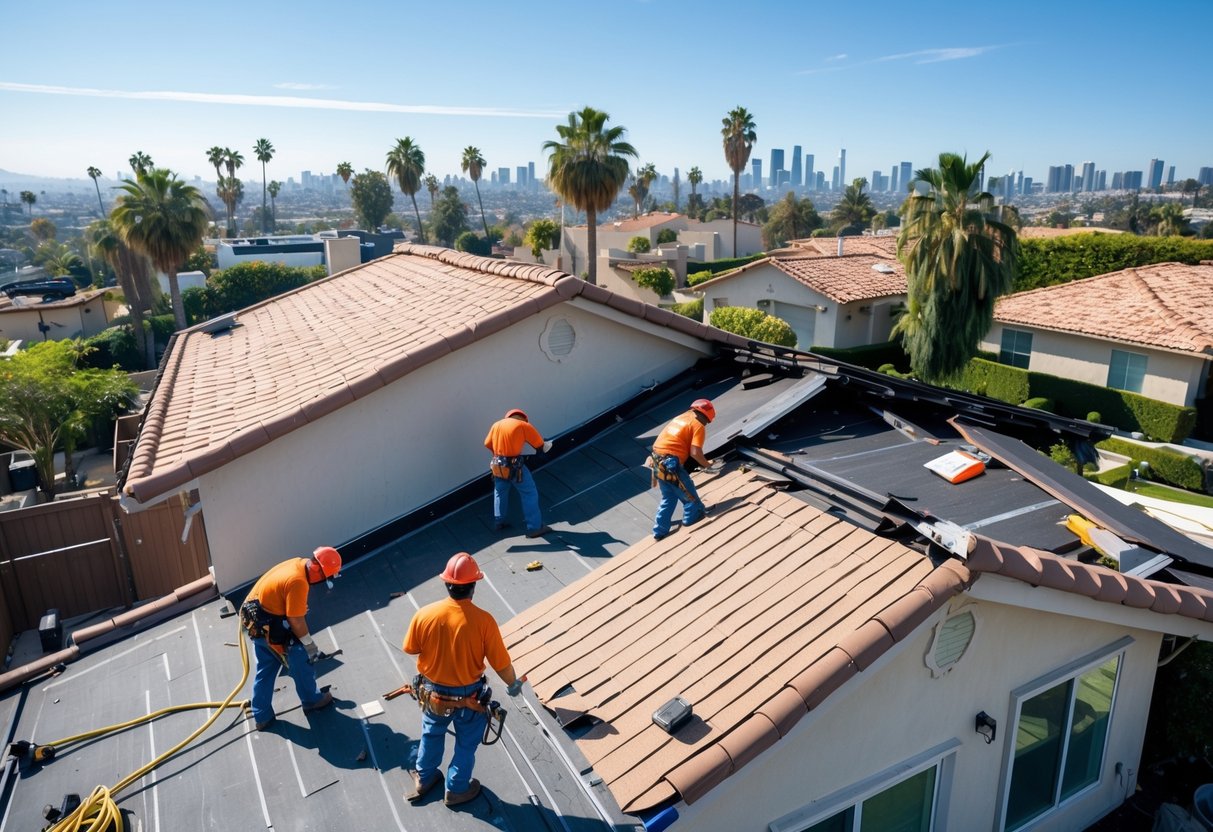
Yes, you need a permit to replace your roof in Los Angeles for most roofing projects, including full roof replacements and major repairs. The Los Angeles Department of Building and Safety requires permits to ensure all roofing work meets safety standards and building codes. Only minor repairs like replacing a few shingles typically don’t require permits.
Understanding the permit process can save homeowners from costly fines, insurance issues, and having to redo work that doesn’t meet city standards. Los Angeles has specific requirements for roofing materials, installation methods, and inspections that must be followed for any significant roofing project.
Key Takeaways
- Most roof replacements and major repairs in Los Angeles require permits from the Department of Building and Safety
- Skipping permits can result in fines, insurance problems, and having to redo completed work
- The city has specific rules for approved roofing materials and installation methods that must be followed
Do You Need a Permit to Replace Your Roof in Los Angeles?
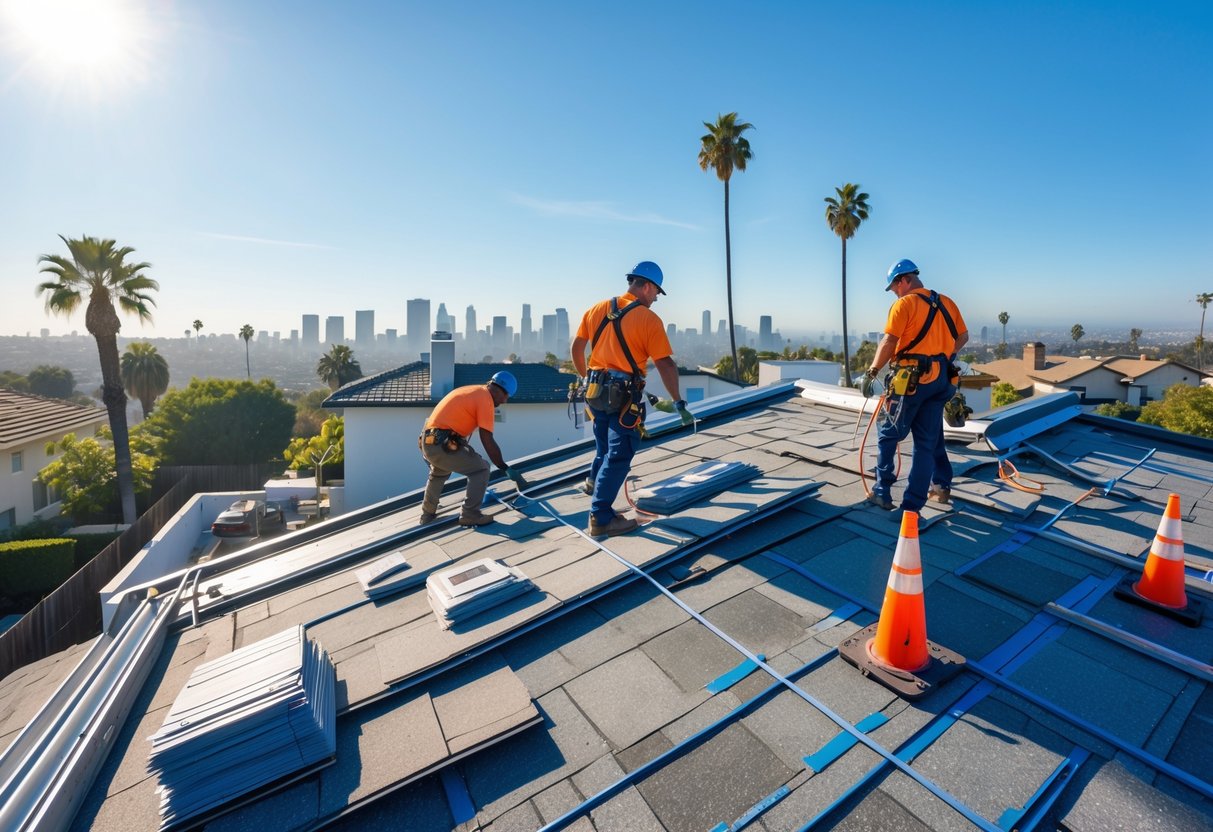
Most roof replacement projects in Los Angeles require a building permit through the Los Angeles Department of Building and Safety. Minor repairs under 100 square feet typically don’t need permits.
When Is a Permit Required for Roof Replacement
A roofing permit is required when homeowners replace more than 100 square feet of roofing material within a one-year period. This rule applies to most full roof replacement projects in Los Angeles.
The Los Angeles Building Code requires permits for complete roof replacements regardless of the roofing materials used. Property owners must obtain permits for:
- Complete roof replacements using any approved materials
- Partial re-roofing covering more than 100 square feet
- Structural changes to the roof deck or framing
- Installation of new roofing materials over existing layers
When 50 percent or more of the total roof area gets re-roofed within one year, the entire roof must meet current building code standards. This means older roofs may need full upgrades to comply with modern safety requirements.
Wood shake or shingle roofs face special rules. The Los Angeles Building Code prohibits wood shake roof coverings within city limits. Any roofing project on these materials requires complete removal and replacement with approved Class A, B, or C roof coverings.
Exceptions and Minor Repairs Without a Permit
Small roofing repairs don’t require permits when they cover less than 100 square feet within a 12-month period. These minor repairs include replacing a few missing or damaged shingles.
Property owners can perform basic maintenance without permits:
- Replacing individual shingles or small sections
- Cleaning gutters and roof surfaces
- Minor flashing repairs that don’t involve structural changes
- Sealing small leaks with approved materials
Emergency repairs after storms or damage may proceed without immediate permits. However, property owners must still obtain proper permits for permanent repairs that exceed the 100 square foot threshold.
The permit requirement resets each year. Homeowners who repair 90 square feet in January can repair another 90 square feet the following January without needing a roofing permit.
Permit Requirements and Approved Roofing Materials
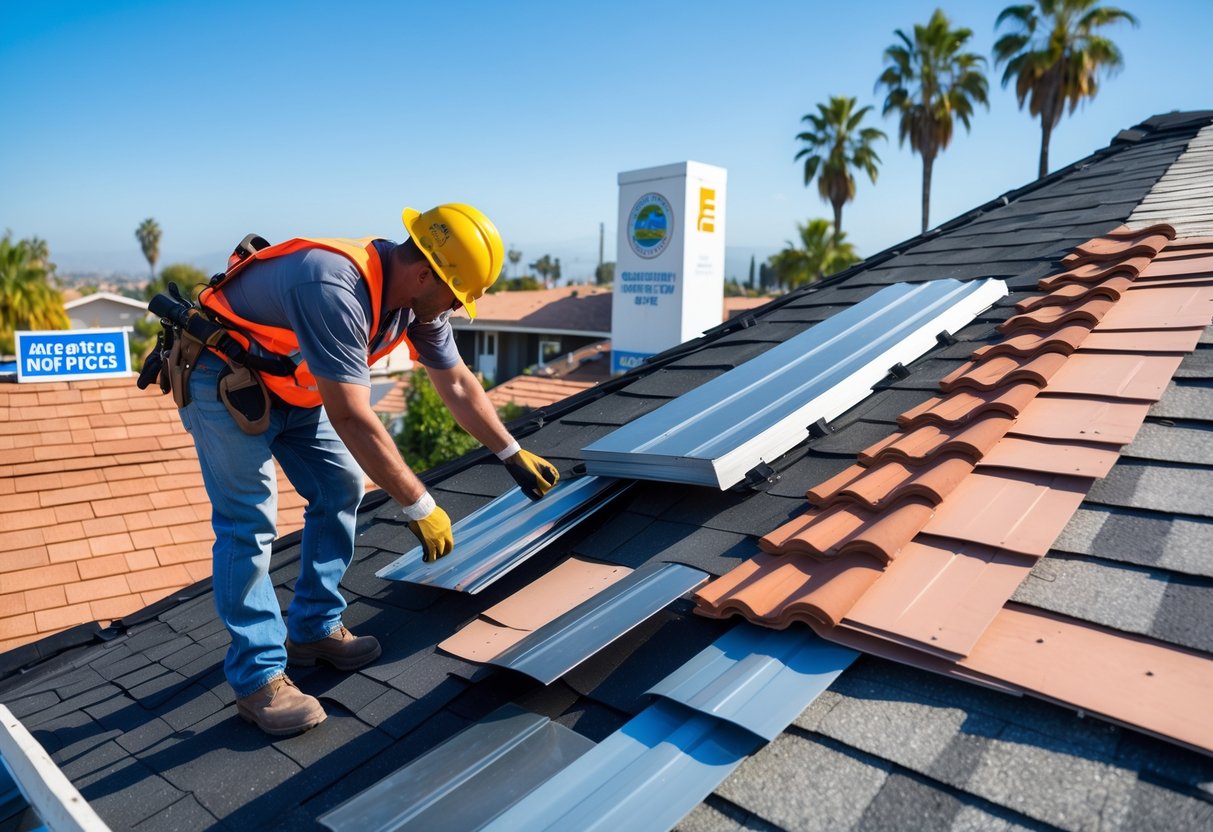
Los Angeles has specific rules about which roofing materials can be used and strict fire safety ratings that must be met. Wood shake and wood shingle roofs face special requirements due to fire safety concerns in the city.
Approved Roofing Materials and Fire Safety Ratings
The Los Angeles Department of Building and Safety allows specific roofing materials through their electronic permit system. Property owners can use asphalt/fiberglass composition shingles or built-up roofing for standard permits.
All roofing materials must have proper labels from approved inspection agencies. Each material package needs certification that shows it meets manufacturing standards.
Fire safety ratings are critical in Los Angeles. Materials must achieve Class A, B, or C fire ratings according to Uniform Building Code Standard 15-2.
Buildings in fire hazard zones have stricter rules. Properties in “FBZ,” “MFD,” or “VHFH” fire districts must use Class A roof coverings only.
Installation over solid sheathing is required for e-permit system materials. If the roof has spaced sheathing, the old roof must be removed first.
New ¾” minimum CDX or OSB solid sheathing must be installed with 8d common nails. The nailing pattern follows 6″-6″-12″ spacing requirements.
Replacing Wood Shake and Wood Shingle Roofs
Wood shake and wood shingle roofs are not approved under the Los Angeles Building Code. Property owners cannot install these materials anywhere in the city.
Existing wood shake or shingle roofs face strict replacement rules. If 50 percent or more of the roof area needs work within one year, the entire roof must be replaced with approved materials.
The new roofing material must meet Class A, B, or C ratings or be an approved non-rated covering. Property owners cannot re-roof over existing wood shakes or shingles.
For projects covering less than 50 percent of the roof area, only the repaired section needs approved materials. However, the wood portion being replaced still must be completely removed before installing new materials.
Los Angeles Department of Building and Safety: Your Permitting Authority
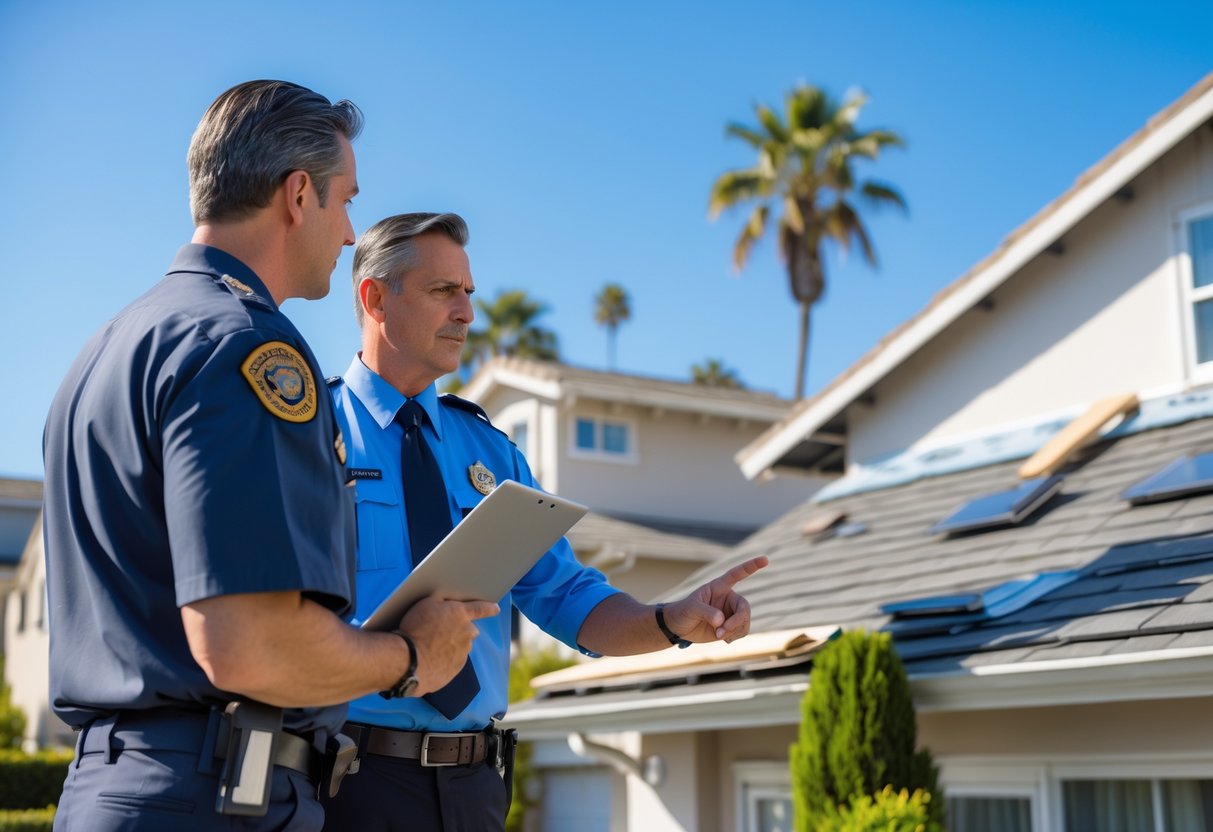
The Los Angeles Department of Building and Safety (LADBS) serves as the primary authority for all roofing permits in Los Angeles. They provide electronic permit systems, inspection services, and guidance to ensure roof replacements meet city building codes and safety standards.
Role of LADBS in Roof Replacement Permitting
LADBS manages the complete roof replacement permit process through their Electronic Permit System (e-Permit system). This system handles permits for specific roofing materials including asphalt/fiberglass composition shingles and built-up roofing.
The department requires permits for most roof replacement projects. Wood shake or shingle roof coverings are not approved within Los Angeles city limits under section 1504.1 of the Los Angeles Building Code.
LADBS enforces specific roofing permit requirements based on project scope:
- 50% or more roof replacement: Entire roof must comply with approved Class A, B, or C coverings
- Less than 50% replacement: Only the replaced portion needs approved coverings
- Fire district locations: Roofs in FBZ, MFD, or VHFH districts require Class A coverings
The department conducts mandatory inspections during roof replacement projects. Most projects require one inspection when work is complete. Projects involving new sheathing need two inspections.
Contacting LADBS for Guidance
Property owners can reach LADBS through multiple contact methods for roofing permit guidance. The Customer Call Center operates from 7am to 5pm daily at 311 for calls within Los Angeles County or (213) 482-0000 for outside calls.
LADBS provides inspection scheduling through their Automated Inspection Request System (AIRS). This system operates 24 hours except between 2am and 3am. Homeowners need permit numbers, site addresses, and contact information when requesting inspections.
The department offers plan review services before permit issuance. They verify compliance with local building codes, safety standards, and zoning requirements. LADBS staff can clarify specific roofing permit requirements for individual projects.
Property owners should contact LADBS before starting any roof replacement work. The department provides guidance on permit necessity, material requirements, and inspection scheduling to ensure code compliance.
The Roofing Permit Process: Application, Fees, and Inspections

Los Angeles offers two permitting paths for roof replacement projects, with specific application steps and inspection requirements that vary based on project complexity. The city requires detailed documentation and scheduled inspections to ensure compliance with building codes.
Express Permits vs. Standard Permitting
The Los Angeles Department of Building and Safety provides an Electronic Permit System (e-Permit system) for standard re-roofing projects. This system works for specific materials like asphalt/fiberglass composition shingles and built-up roofing.
Express permits through the e-Permit system speed up approval for straightforward roof replacements. These permits work when homeowners use approved materials and follow standard installation methods.
Standard permitting becomes necessary for complex projects. This includes installations with materials not covered by the e-Permit system or projects requiring special considerations.
Express Permit Eligible Materials:
- Asphalt/Fiberglass composition shingles
- Built-up roofing systems
Projects in special fire zones may require standard permits even with basic materials. High Wind Areas also trigger additional requirements that may need standard permitting.
Permit Application Steps and Documentation
Property owners start by determining which permit type fits their project. The local building department provides guidance on specific requirements for each property location.
Online applications through the LADBS portal streamline the submission process. Applicants must provide detailed project information including materials, square footage, and installation methods.
Required Documentation:
- Project valuation details
- Material specifications
- Site address and property information
- Contractor information (if applicable)
Permit fees depend on project valuation and local fee schedules. The city sets these costs, though contractors may charge additional fees for managing the permit process.
Application review times vary based on project complexity. Express permits typically process faster than standard applications requiring detailed plan review.
Inspection Stages for Roof Replacement
Most re-roofing projects with existing solid sheathing require only one final inspection. Projects needing sheathing verification or replacement require two separate inspections.
The first inspection covers sheathing verification or new sheathing installation. Inspectors must approve this stage before any roofing material or underlayment installation begins.
Inspection Request Methods:
- Automated Inspection Request System (AIRS) – available 24/7
- Customer Call Center (CCC) – 7am to 5pm business hours
- Dial 311 (Los Angeles County) or (213) 482-0000
Sheathing inspections use the “305 – Rough Frame” code. Final inspections after completion use the “335 – Final” code through the AIRS system.
Inspectors provide required signature cards during the first or only inspection visit. Next-day inspections are available when requested before 3pm (AIRS) or 2pm (CCC) the previous business day.
Consequences of Replacing a Roof Without a Permit
Replacing a roof without proper permits in Los Angeles creates serious legal and financial problems for homeowners. These violations can also cause major issues with insurance coverage and make selling the home much harder.
Legal and Financial Risks
Property owners face immediate stop-work orders from the Los Angeles Department of Building and Safety. These orders halt all construction until proper permits are obtained.
Fines start at $350 to $600 for unpermitted roofing projects. The city can impose additional penalties up to 10 times the original permit cost.
Homeowners must pay retroactive permit fees that cost triple the original amount. The city also charges extra inspection fees and penalty assessments.
The Department of Building and Safety can place liens on properties with unpermitted work. These liens prevent homeowners from selling or refinancing until all fines are paid.
Courts may order complete removal of the new roof if it doesn’t meet building codes. This forces homeowners to start over with proper permits and licensed contractors.
Insurance and Resale Implications
Insurance companies often deny claims for damage related to unpermitted roof work. This leaves homeowners fully responsible for repair costs and liability issues.
Insurers may cancel existing policies when they discover unauthorized roofing projects during inspections. Finding new coverage becomes more expensive with permit violations on record.
Home appraisers reduce property values when they find unpermitted work. Banks frequently refuse mortgages for homes with unauthorized roof replacements.
Homeowners must disclose permit violations to potential buyers in Los Angeles. Many buyers walk away from properties with unpermitted roofing projects.
The sale process takes longer as buyers request extra inspections. Sellers often pay for new permits and possible roof modifications before closing.
Additional Considerations for Roofing Projects in Los Angeles
Getting the right contractor and understanding permit costs will save homeowners time and money. These two factors can make or break a roofing project.
Choosing a Licensed Roofing Contractor
Homeowners must verify their contractor holds a valid California license. The Contractors State License Board website allows quick license verification online.
Essential contractor requirements include:
- Active contractor’s license
- Workers’ compensation insurance
- General liability insurance
- Local business license
Smart homeowners get at least three written bids. Each bid should list the same roofing material and project scope for fair comparison.
Check references from recent jobs. Ask to see completed work in person when possible. Good contractors welcome these requests.
The contractor should handle all permit paperwork. They know local building codes and inspection requirements. This saves homeowners from dealing with the Los Angeles Department of Building and Safety directly.
Never hire contractors who go door-to-door or demand full payment upfront. Licensed professionals don’t operate this way.
Permit Costs for Roof Replacement
Los Angeles permit fees typically range from $200 to $500 for most residential roofing projects. The exact cost depends on the project value and scope.
Permit costs are based on:
- Total project value
- Square footage of roof area
- Type of roofing material used
- Structural changes required
The Los Angeles Department of Building and Safety website has a fee calculator. Homeowners can estimate costs before applying.
Contractors may charge extra fees for handling permits. This service fee ranges from $100 to $300 on top of city permit costs.
Complex roofing projects need plan review. This adds time and higher fees to the permit process.
Homeowners can apply for permits themselves to save contractor fees. However, most people prefer letting their contractor handle the paperwork and inspections.
Frequently Asked Questions
Los Angeles homeowners must get permits for most roof replacement projects and follow specific requirements set by the Department of Building and Safety. The city has clear rules about who can do the work, what materials are allowed, and what happens if you skip the permit process.
What are the requirements for obtaining a roofing permit in Los Angeles?
Homeowners need to submit detailed plans showing the roofing project to the Los Angeles Department of Building and Safety. They must provide proof of property ownership and a contract or description of the work.
The application must include information about materials and labor costs. Plans need to show the type of roofing material, project scope, and any structural changes.
All roofing materials must meet city standards and bear labels from approved inspection agencies. Wood shake or shingle roofs are banned in Los Angeles and must be replaced with approved materials.
Can homeowners replace their roof without a professional contractor in LA?
Yes, homeowners can replace their own roof in Los Angeles as long as they get the proper permit first. The permit requirement applies to all roof replacements regardless of who does the work.
Homeowners must still follow all building codes and safety standards. They need to schedule required inspections during and after the project.
The Department of Building and Safety will check the work to make sure it meets local regulations. Homeowners are responsible for knowing and following all rules.
What types of roofing work in Los Angeles require a permit?
Any roof replacement or repair covering more than 10% of the roof requires a permit in Los Angeles. Full roof replacements always need permits regardless of size.
Projects involving structural changes to the roof also need permits. Installing new roofing materials over existing ones typically requires approval.
Minor repairs like fixing a few shingles or patching small leaks usually don’t need permits. When in doubt, homeowners should check with the Department of Building and Safety.
Are there exceptions to the permit rule when repairing a roof in Los Angeles?
Small roof repairs like replacing a few damaged shingles don’t require permits. Emergency repairs to prevent water damage may also be exempt from immediate permit requirements.
The city considers work covering less than 10% of the roof as minor repair. Cleaning gutters or replacing individual tiles typically doesn’t need permits.
However, any major work or full replacement always requires a permit. Homeowners should contact LADBS to confirm if their specific project needs approval.
How does the permitting process work for roof replacement in Los Angeles?
Homeowners start by filling out an application form online or at a Department of Building and Safety office. They submit required documents including plans and project details.
Simple re-roofing projects may get permits immediately. Complex projects need a plan review process that takes longer.
Permit fees range from $200 to $500 depending on project size and value. After approval, homeowners must keep the permit on-site during work and schedule required inspections.
What penalties can be incurred for not obtaining a roof permit in LA?
The city can issue fines for unpermitted roof work. Officials may require homeowners to remove the new roof and start over with proper permits.
Unpermitted work creates problems when selling a home. Insurance companies may deny claims for work done without permits.
The cost of redoing work and paying fines often exceeds the original permit fees. Home sales can be delayed or cancelled due to unpermitted roofing work.