
Flat roof owners often struggle with one critical question when problems arise: should they repair the existing roof or replace it entirely? This decision can mean the difference between spending a few hundred dollars on repairs or several thousand on a complete replacement. The key is identifying specific warning signs like water spots on ceilings, pooling water, visible tears in the membrane, and the age of your roof to determine whether repair or replacement is the most cost-effective solution.
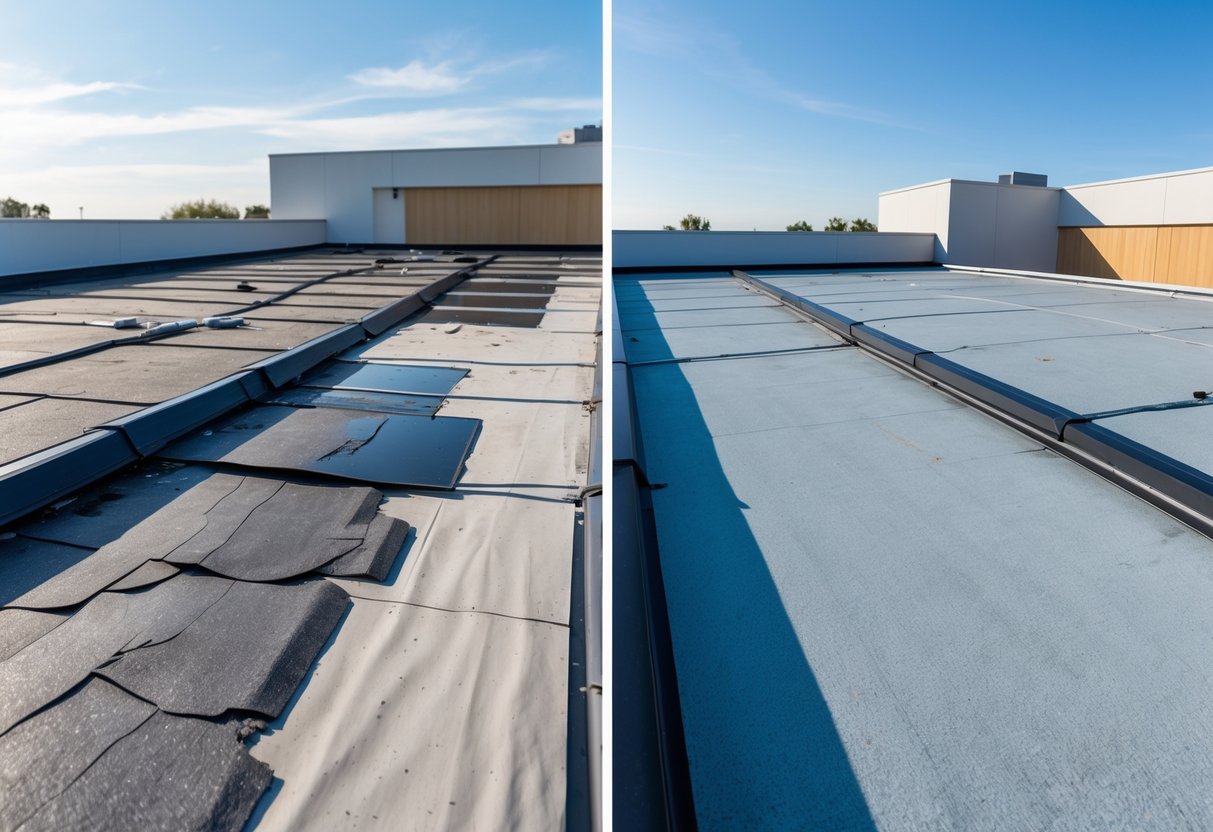
Several clear indicators help property owners make this important choice. Minor issues like small tears, loose flashing, or isolated leaks often require only targeted repairs. However, widespread damage, multiple leak points, or roofs approaching their 10-30 year lifespan typically need full replacement to avoid ongoing problems and costly water damage.
Understanding these warning signs can save property owners thousands of dollars and prevent extensive interior damage. The following guide breaks down the specific symptoms to look for and provides a clear framework for making this crucial roofing decision.
Key Takeaways
- Water spots on ceilings and pooling water on the roof surface are the clearest signs that immediate professional attention is needed
- Minor damage like small tears or loose flashing can often be repaired, while widespread issues or aging roofs typically require full replacement
- Professional inspection is essential to accurately assess damage and determine the most cost-effective solution for your specific situation
Key Signs That Indicate Flat Roof Replacement Is Needed
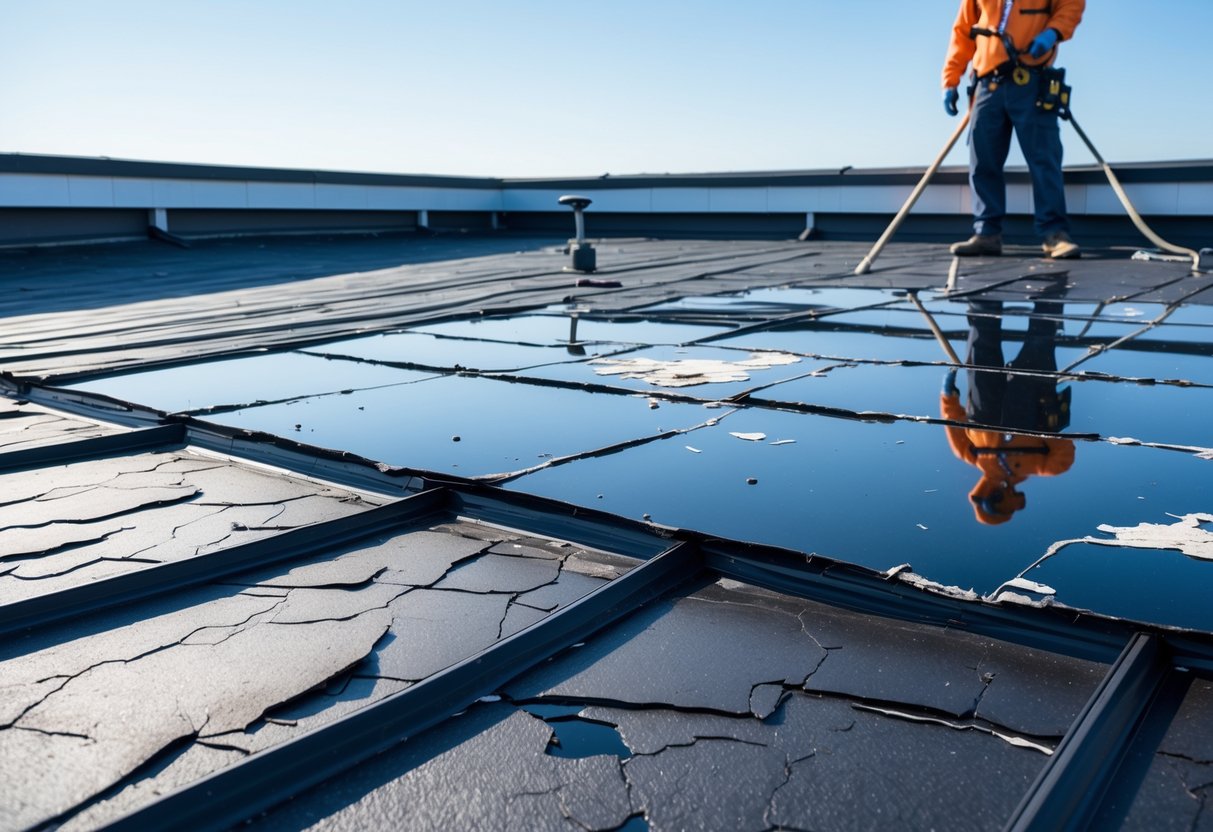
When flat roofs show widespread damage across multiple areas or have significant structural problems, replacement becomes necessary. Major membrane deterioration, repeated repair failures, and sagging indicate the roof system has reached the end of its useful life.
Persistent or Widespread Leaks
Multiple leaks across different areas of a flat roof signal that the entire roof membrane has failed. When water spots appear on ceilings in several rooms, the damage extends beyond what simple repairs can fix.
Leaks that return after repairs indicate underlying problems with the roof system. The membrane may have developed micro-cracks that allow water to penetrate in multiple locations.
Signs of widespread leak damage include:
- Water stains on multiple ceiling areas
- Recurring leaks in the same spots after repairs
- New leaks appearing shortly after fixing others
- Musty odors from water damage in walls or insulation
When leaks affect more than 25% of the roof area, flat roof replacement becomes more cost-effective than patching individual problem spots. Persistent moisture also creates mold growth risks that threaten indoor air quality.
Significant Membrane Damage or Deterioration
Extensive cracking, splitting, or blistering across large sections of the roof membrane cannot be repaired effectively. When the protective layer shows widespread breakdown, water will continue finding new ways to penetrate.
Roof membrane deterioration appears as dark spots that remain wet long after rain stops. These areas indicate the waterproof barrier has failed and allows moisture to soak into the roof structure.
Critical membrane damage includes:
- Cracks longer than 12 inches
- Multiple blisters or bubbles across the surface
- Exposed roof deck or insulation
- Membrane pieces that have completely separated
Age-related deterioration affects the entire membrane system. When one area fails significantly, other sections typically follow within months due to similar exposure conditions.
Frequent Repairs and Multiple Patches
Roofs requiring repairs more than twice per year indicate systemic failure rather than isolated problems. Multiple patches create weak points where new leaks often develop at patch edges.
Each repair disrupts the roof’s waterproof integrity. Roof damage spreads faster when patches fail because water finds new paths around repaired areas.
Repair frequency warning signs:
- Three or more repairs in two years
- Patches covering more than 15% of roof area
- New problems appearing within six months of repairs
- Repair costs exceeding 30% of replacement cost
The cost of repeated repairs quickly approaches roof replacement expenses. Property owners save money by replacing roofs that need constant maintenance rather than continuing temporary fixes.
Roof Sagging or Structural Issues
Sagging areas indicate serious structural problems that require immediate attention. When roof decking or support beams weaken from water damage, repairs cannot restore proper structural integrity.
Pooling water in low spots creates ongoing moisture problems that worsen structural damage. These areas collect debris and ice, adding weight that stresses the roof system further.
Structural damage indicators:
- Visible dips or low areas on the roof surface
- Ceiling sagging inside the building
- Cracks in walls near the roofline
- Doors or windows that stick due to building movement
Structural issues pose safety risks to building occupants. Roof replacement with proper drainage and structural repairs prevents catastrophic failure that could cause injuries or extensive property damage.
Common Indicators That a Flat Roof Can Be Repaired
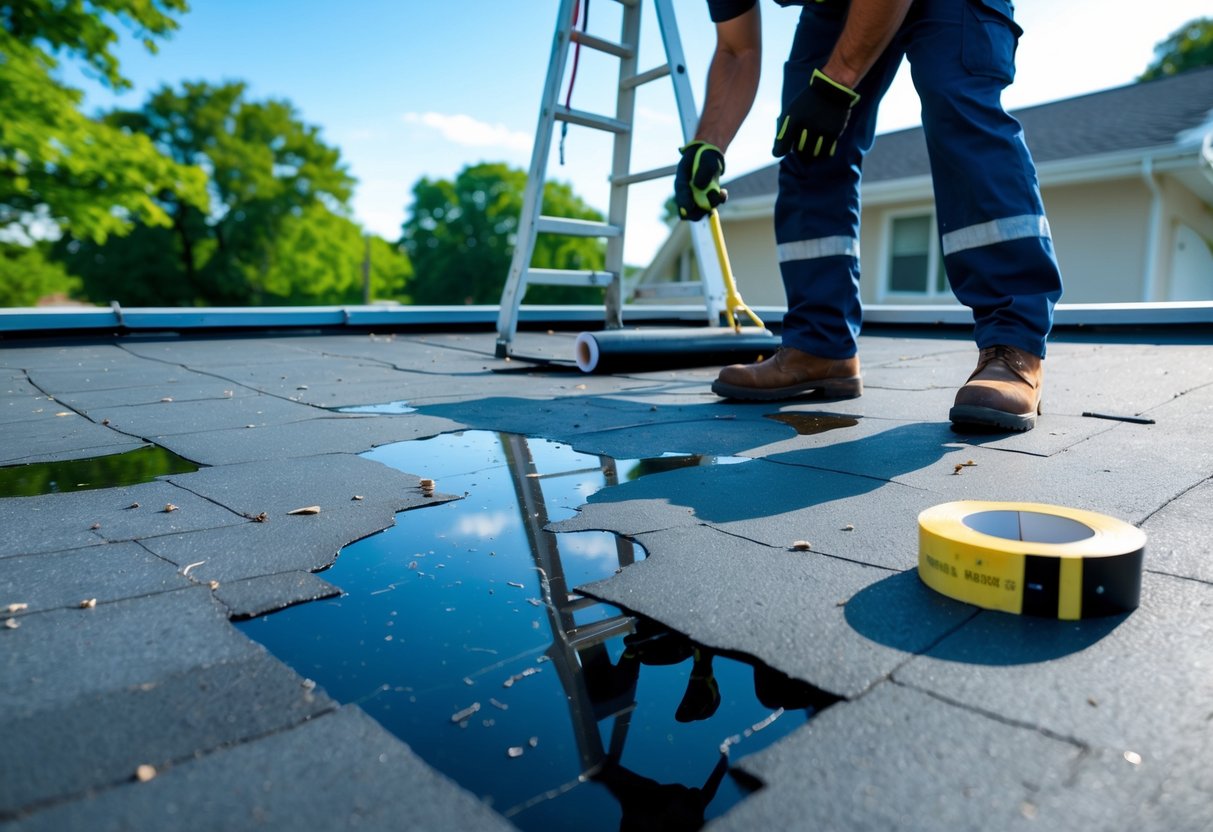
Most flat roof problems can be fixed with targeted roof repairs when caught early. Small leaks, minor punctures, limited ponding water, and surface damage are typically manageable issues that don’t require full replacement.
Minor Isolated Leaks
Small leaks that appear in one or two spots usually indicate repairable damage. These leaks often show up as water stains on ceilings or walls inside the building.
Key signs of repairable leaks:
- Water spots limited to specific areas
- Stains that appear only during heavy rain
- Dry areas between leak locations
A roofer can often fix isolated leaks by applying sealant or patching the damaged membrane. The repair process typically involves cleaning the area and applying waterproof materials over the leak.
Quick action prevents small leaks from spreading to other roof areas. Ignoring minor leaks can lead to structural damage that requires costly replacement.
Localized Punctures or Tears
Small holes or tears in the roof membrane can usually be repaired without replacing the entire roof. These punctures often result from falling branches, hail damage, or foot traffic.
Repairable puncture characteristics:
- Tears smaller than 6 inches in length
- Holes less than 2 inches in diameter
- Damage confined to the top membrane layer
Roof repair specialists can patch these areas using compatible roofing materials. The process involves cutting away damaged sections and installing new membrane material.
Multiple small punctures across the roof may indicate the need for replacement. However, a few isolated tears are manageable repair projects.
Small Areas of Ponding Water
Limited ponding water doesn’t always mean the roof needs replacement. Small pools that drain within 48 hours after rain often require minor adjustments.
Repairable ponding situations:
- Water pools smaller than 10 square feet
- Areas that drain completely between storms
- Ponding near roof edges or drains
Contractors can fix minor ponding by adjusting roof slopes or clearing blocked drains. Adding tapered insulation can also redirect water flow toward proper drainage points.
Extensive ponding water across large roof sections typically indicates structural problems. These situations often require full roof replacement to correct underlying issues.
Early-Stage Blistering or Surface Cracks
Surface-level damage like small blisters or hairline cracks can often be repaired before they worsen. These issues typically affect only the top layer of roofing material.
Repairable surface damage:
- Blisters smaller than tennis balls
- Cracks less than 1/4 inch wide
- Damage limited to surface layers
Roof repairs for blistering involve cutting open the blister and sealing it with roofing cement. Small cracks can be filled with appropriate sealants.
Advanced blistering or deep cracks that penetrate multiple layers usually require replacement. Early intervention prevents minor surface issues from becoming major problems.
How to Perform a Thorough Flat Roof Inspection
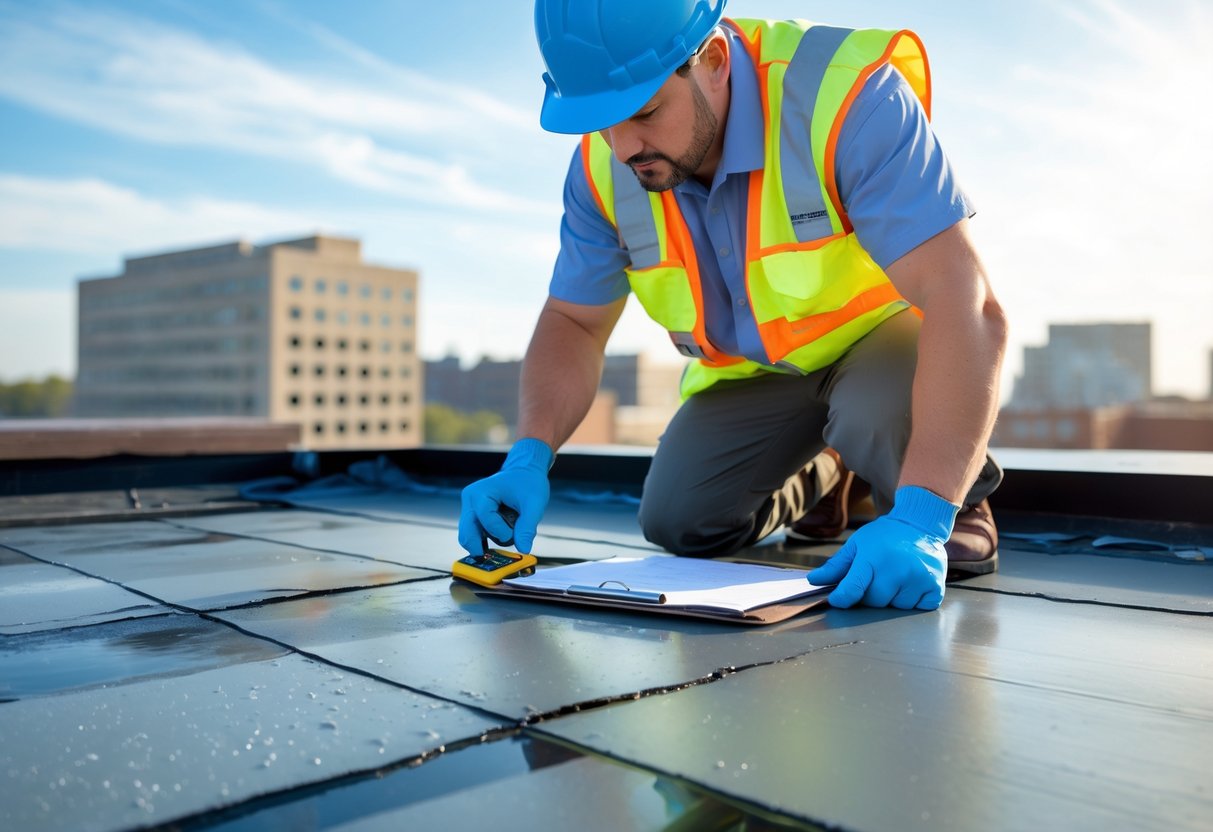
A complete roof inspection involves checking both inside and outside areas for damage signs, examining the roof membrane for wear and deterioration, and inspecting all flashing and edge components for proper sealing.
Interior and Exterior Signs to Assess
Start the roof inspection by checking inside the building for water damage signs. Look for water spots on ceilings and walls on the top floor. These dark or discolored patches indicate active leaks.
Check for peeling paint or bubbling wallpaper near the roofline. These signs often appear before visible water spots develop.
Move outside to examine the roof surface after rainfall. Look for pooling water that remains 24 hours after a storm. Standing water shows drainage problems or improper slope.
Walk around the building’s perimeter to spot exterior damage signs:
- Cracks in exterior walls near the roofline
- Water stains on building sides
- Damaged gutters or downspouts
- Debris buildup around roof edges
Schedule roof inspections twice yearly, ideally in spring and fall. This timing helps catch damage from winter storms and summer heat before problems worsen.
Evaluating the Roof Membrane Condition
The roof membrane forms the main waterproof barrier and requires careful examination. Look for visible tears or punctures in the membrane surface. These openings allow water to penetrate and cause leaks.
Check for blistering or bubbling areas where the membrane has separated from the roof deck. Press gently on suspected areas to test for soft spots that indicate moisture penetration.
Examine the membrane for these specific damage types:
| Damage Type | What to Look For | Severity Level |
|---|---|---|
| Cracking | Visible splits in material | Medium to High |
| Shrinkage | Pulled-back edges | Medium |
| Punctures | Holes from debris | High |
| UV damage | Faded or brittle areas | Medium |
Look for dark spots that remain wet long after rain stops. These areas show where water has soaked through the membrane layers.
Check all seams where membrane pieces connect. Separated seams create entry points for water and require immediate attention.
Checking Roof Flashing and Edges
Roof flashing protects vulnerable areas where the roof meets walls, vents, or other structures. Inspect all flashing for separation or gaps between the flashing and roof surface.
Look for loose or missing fasteners around flashing areas. Wind can lift improperly secured flashing and create leak pathways.
Examine these critical flashing locations:
- Around HVAC units and vents
- Where roof meets parapet walls
- At roof drains and scuppers
- Along roof edges and corners
Check for rust or corrosion on metal flashing components. Corroded flashing loses its waterproofing ability and needs replacement.
Test flashing flexibility by gently pressing edges. Brittle or cracked flashing cannot expand and contract properly with temperature changes.
Inspect roof edge details for proper attachment. Loose edges allow wind to get under the membrane and cause extensive damage during storms.
Look for caulk deterioration around flashing joints. Old or cracked caulk allows water penetration and should be resealed promptly.
Influential Factors in Deciding on Flat Roof Repair or Replacement
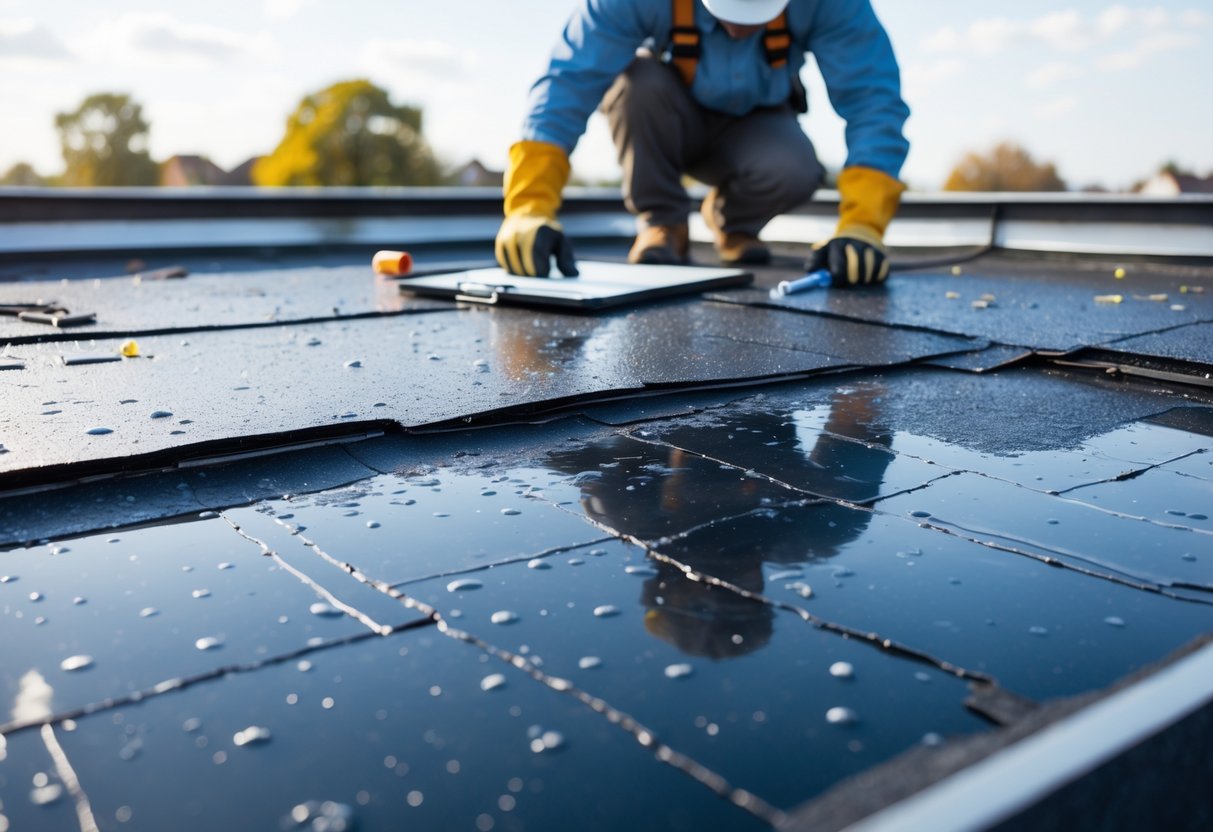
The age of your roof, how much damage exists, and past repair work all play major roles in this decision. These three factors help determine whether fixing problems makes sense or if a full replacement is the better choice.
Roof Age and Expected Lifespan
Roof age serves as the foundation for making repair versus replacement decisions. Different flat roof materials have specific lifespans that guide these choices.
TPO and PVC roofs typically last 15-20 years. EPDM roofs can reach 20-30 years. Modified bitumen roofs usually last 10-20 years.
A roof in its first third of expected life often benefits from repairs. Problems during this period usually stem from installation issues or isolated damage.
Roofs in their middle years require careful evaluation. Minor issues might warrant repairs. Multiple problems or significant damage often point toward replacement.
Roofs approaching or exceeding their expected lifespan should be replaced rather than repaired. Even successful repairs on old roofs provide only temporary solutions.
The quality of original materials and installation affects these timelines. Premium materials and expert installation extend roof life beyond average ranges.
Extent and Severity of Damage
The scope of damage determines whether repairs can effectively address problems or if replacement becomes necessary.
Minor damage includes small cracks, isolated blisters, or single leak points. These issues typically respond well to targeted roof repairs when caught early.
Moderate damage involves multiple problem areas, membrane deterioration, or recurring leaks. This level often requires extensive repairs that may not provide long-term value.
Severe damage includes widespread cracking, significant ponding water, sagging roof deck, or structural issues. These problems demand full replacement for safety and effectiveness.
Water damage inside the building indicates serious roof failure. This type of damage usually means the roof membrane has failed in multiple locations.
Percentage of affected area helps guide decisions. Damage covering more than 25-30% of the roof surface typically favors replacement over multiple repairs.
Previous Repair History
Past repair work provides valuable insight into the roof’s overall condition and future reliability.
Roofs with minimal previous repairs often respond well to current fix attempts. Limited repair history suggests the roof system remains fundamentally sound.
Multiple previous repairs in the same areas indicate ongoing problems. Repeated fixes in identical locations suggest underlying issues that repairs cannot resolve.
Recent extensive repair work followed by new problems points toward systemic roof failure. This pattern indicates the roof has reached the end of its useful life.
Cost accumulation from previous repairs factors into current decisions. When past repair costs approach 50% of replacement cost, replacement becomes more economical.
Documentation of previous repair work helps identify problem patterns. Property owners should maintain records of all roof repairs, including dates, costs, and problem types addressed.
Cost and Material Considerations for Flat Roof Solutions
Understanding the financial impact of flat roof solutions helps homeowners make informed decisions. Repair costs typically range from $300 to $3,000, while replacement costs span $6,000 to $22,500 for average-sized roofs.
Upfront Costs: Repair vs Replacement
Minor flat roof repairs cost between $300 and $1,500 for issues like small leaks or membrane patches. These fixes address localized problems without major structural work.
Major repairs range from $1,500 to $3,000 and involve larger membrane sections or drainage improvements. Repairs become less cost-effective when damage covers more than 30% of the roof surface.
Flat roof replacement costs $4 to $15 per square foot, depending on materials and labor. A typical 1,500 square foot roof replacement ranges from $6,000 to $22,500 total.
Key cost factors include:
- Roof size and accessibility
- Material selection
- Labor rates in the area
- Tear-off requirements
- Insulation upgrades
- Permit fees
Replacement becomes more economical when repair costs exceed 50% of replacement costs or when the roof requires frequent fixes.
Common Flat Roofing Materials
EPDM rubber roofing costs $4 to $8 per square foot and lasts 20-25 years. This affordable option provides good durability but absorbs heat due to its black surface.
TPO roofing ranges from $5 to $10 per square foot with a 15-20 year lifespan. The white reflective surface improves energy efficiency, though quality varies between manufacturers.
PVC roofing costs $6 to $11 per square foot and lasts 20-30 years. It offers excellent chemical resistance and energy efficiency but requires higher upfront investment.
Modified bitumen systems cost $3 to $7 per square foot with 10-20 year lifespans. These systems install easily but may crack over time in extreme temperatures.
Built-up roof (BUR) systems range from $4 to $9 per square foot and last 15-30 years. Multiple layers provide excellent protection but add significant weight to structures.
Energy Efficiency and Long-Term Value
Light-colored roofing materials reflect sunlight and reduce cooling costs by 10-15% compared to dark surfaces. White TPO and PVC membranes perform best for energy savings.
Proper insulation adds $1.50 to $3.00 per square foot but reduces energy bills significantly. R-30 insulation values work well for most climates and building codes.
Long-term value considerations:
- Material lifespan: Premium materials cost more initially but require fewer replacements
- Maintenance requirements: Some materials need annual inspections and minor repairs
- Energy savings: Reflective surfaces and insulation reduce utility costs over time
- Warranty coverage: Longer warranties protect against premature failures
Higher-quality materials typically provide better return on investment through reduced maintenance costs and energy savings. Homeowners should calculate total cost of ownership rather than focusing solely on initial expenses.
The Importance of Hiring a Qualified Roofing Contractor
Choosing the right roofing contractor determines whether a flat roof lasts decades or fails within a few years. Professional contractors bring expertise in materials, installation techniques, and safety standards that protect homeowners from costly mistakes.
Selecting an Experienced Roofer
Licensed roofing contractors carry proper insurance and bonding to protect homeowners from liability. They understand local building codes and permit requirements that DIY repairs often miss.
Experienced roofers can quickly identify whether a flat roof needs repair or full replacement. They know the difference between surface damage and structural issues that require immediate attention.
Key qualifications to verify:
- Valid contractor license
- Current liability insurance
- Workers’ compensation coverage
- Local references from recent projects
- Manufacturer certifications
Quality contractors use proper materials and follow manufacturer guidelines. This ensures warranty coverage remains valid and the roof performs as expected.
They also understand flat roof drainage systems and can spot problems that untrained eyes miss. Poor drainage causes most flat roof failures over time.
Benefits of Professional Assessments
Professional roof inspections reveal hidden damage that homeowners cannot see from the ground. Contractors use specialized tools and training to assess membrane condition, insulation problems, and structural issues.
A qualified roofing contractor can estimate remaining roof life accurately. This helps homeowners plan replacement timing and avoid emergency situations during storms.
Professional assessments include:
- Moisture detection using infrared cameras
- Core samples to check insulation condition
- Drainage system evaluation
- Structural load assessment
Contractors provide detailed written reports with photos and repair recommendations. These documents help homeowners make informed decisions about repair versus replacement costs.
They also work directly with insurance companies during claims processes. This expertise helps homeowners get proper coverage for storm damage or other covered events.
Frequently Asked Questions
Property owners often struggle to determine when their flat roof requires complete replacement versus simple repairs. The decision depends on specific damage indicators, roof age, and the extent of structural issues present.
What are the key indicators that a flat roof needs to be replaced rather than repaired?
Multiple leaks across different areas of the roof indicate widespread membrane failure. This usually means the entire roofing system has deteriorated beyond repair.
Extensive blistering or bubbling covers more than 25% of the roof surface. These issues show the adhesive has failed in large sections.
Structural sagging or soft spots suggest underlying deck damage. Water may have penetrated deep into the roof structure.
Persistent pooling water remains after 48 hours following rainfall. This indicates improper drainage or structural settling that requires full replacement.
How can you tell if a flat roof is at the end of its service life?
Most flat roofs last between 10 and 30 years depending on the material type. EPDM roofs typically last 15-25 years, while TPO roofs last 10-20 years.
Built-up roofing systems can last 20-30 years with proper maintenance. Modified bitumen roofs generally last 10-20 years.
Roofs approaching these age limits should be replaced even if damage appears minimal. Older roofs become less reliable and more expensive to maintain.
What are the common signs of water damage on a flat roof that suggest a replacement is necessary?
Water stains appear on multiple ceiling areas inside the building. This indicates several leak points across the roof membrane.
Dark spots persist on the roof surface for more than 24 hours after rain. These spots show water has penetrated the membrane completely.
Mold or mildew grows on interior walls or ceilings. This suggests ongoing moisture problems that simple repairs cannot fix.
Insulation becomes saturated and loses its effectiveness. Wet insulation must be replaced along with the entire roofing system.
Are there specific issues with a flat roof that are typically unfixable, thus requiring a complete replacement?
Membrane shrinkage pulls the roofing material away from edges and penetrations. This creates gaps that cannot be permanently sealed with patches.
Thermal movement causes widespread cracking across the roof surface. These cracks will continue to spread regardless of repair attempts.
Poor installation creates drainage problems that cannot be fixed without complete reconstruction. Water will continue pooling in low areas.
Incompatible repair materials have been used over time. These create weak points where different materials meet.
What considerations should be taken into account when deciding between roof repair and roof replacement?
The extent of damage affects the decision significantly. Repairs work best when damage covers less than 25% of the roof area.
Budget constraints may favor short-term repairs over replacement. However, frequent repairs often cost more than replacement over time.
Building use determines urgency levels for the decision. Critical facilities may require immediate replacement to prevent business interruption.
Energy efficiency improvements come only with full replacement. Modern roofing materials provide better insulation and lower utility costs.
How does the age of a flat roof play into the decision to repair or replace it?
Roofs under 10 years old usually benefit from repairs unless damage is severe. The remaining lifespan makes repairs cost-effective.
Roofs between 10-20 years old require careful evaluation. The decision depends on maintenance history and current condition.
Roofs over 20 years old should typically be replaced rather than repaired. The risk of additional failures increases significantly with age.
Replacement becomes more economical when repair costs exceed 25% of replacement costs. This threshold often occurs with older roofs.