
Choosing the right flat roof for your Los Angeles warehouse can significantly impact your building’s energy efficiency, maintenance costs, and long-term durability. With LA’s intense sun exposure, minimal rainfall, and warm climate, warehouse owners need roofing materials that can handle high temperatures while keeping cooling costs manageable.
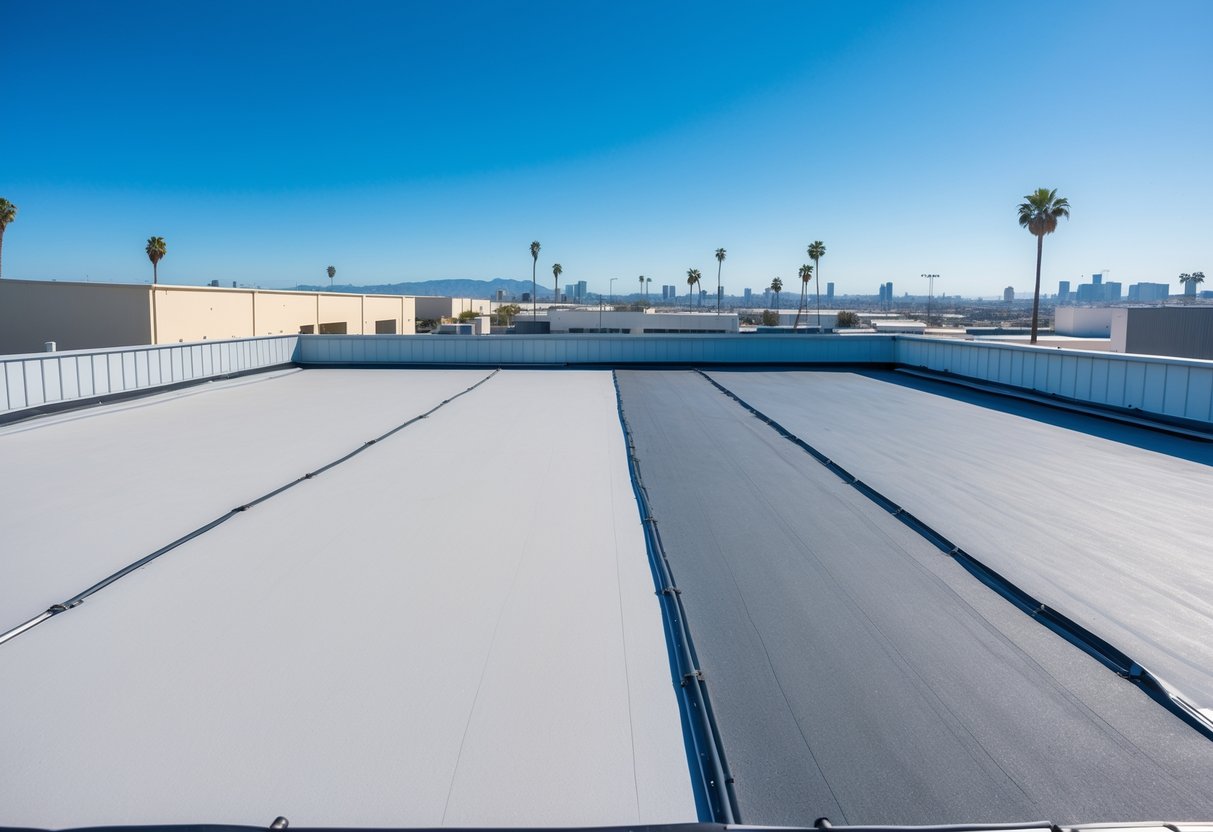
For LA warehouses, TPO offers the best balance of affordability and energy efficiency, while PVC provides superior durability for facilities with chemical exposure, and EPDM remains the most cost-effective option for basic protection. Each material performs differently under Southern California’s unique weather conditions, making the selection process crucial for your building’s performance.
The decision between TPO, EPDM, and PVC involves weighing factors like upfront costs, energy savings, lifespan expectations, and your warehouse’s specific needs. Understanding how these three popular membrane options handle LA’s climate will help you make an informed choice that protects your investment for decades.
Key Takeaways
- TPO provides excellent energy efficiency and moderate costs, making it ideal for most LA warehouse applications
- PVC offers the longest lifespan and best chemical resistance but comes with higher upfront installation costs
- EPDM delivers reliable basic protection at the lowest price point, though it requires more frequent maintenance in hot climates
Overview of Flat Roof Membranes
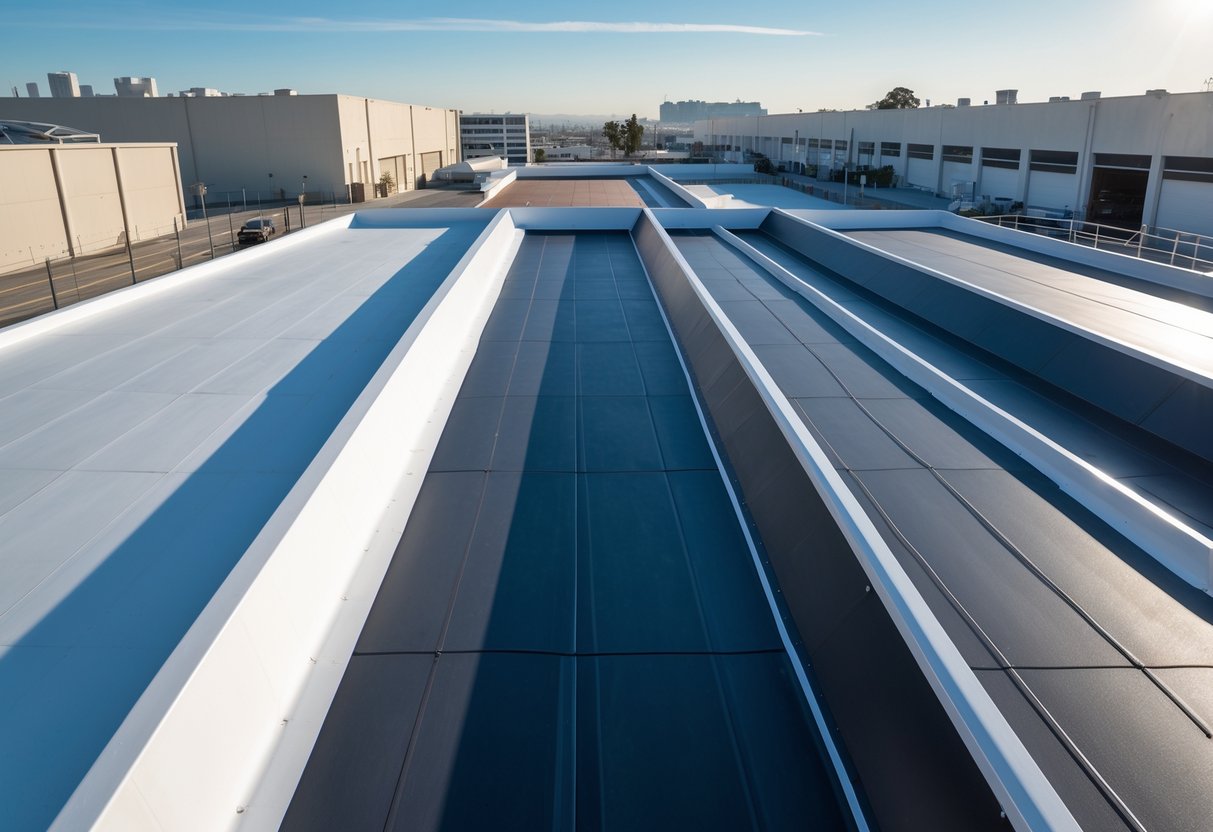
Single-ply membrane systems use large factory-made sheets to create waterproof barriers for commercial buildings. These membranes work differently than steep roofs by collecting water and directing it to drains rather than shedding it quickly.
What Is Single-Ply Roofing?
Single-ply roofing uses one layer of synthetic material to protect buildings from water damage. These systems come in large sheets that cover flat or low-slope surfaces.
Thermoset membranes like EPDM rubber use chemical bonds during manufacturing. Workers connect the seams with adhesive tapes and special bonding agents.
Thermoplastic membranes include TPO and PVC materials. These sheets can be heated and welded together to form strong, permanent seams.
The three main types of single-ply membranes are:
- EPDM – synthetic rubber membrane
- TPO – thermoplastic polyolefin
- PVC – polyvinyl chloride
Factory-made sheets reduce installation time compared to built-up roofing systems. Most single-ply membranes come in widths of 6 to 20 feet.
Flat Roof and Low-Slope Roof Applications
Flat roofs have slopes of 1/4 inch per foot or less. Low-slope roofs range from 1/4 inch to 3 inches per foot.
These roof types work like bathtubs that collect rainwater. Water flows to drains, scuppers, or internal piping systems instead of running off quickly.
Drainage design becomes critical for flat roofing systems. Clogged drains can cause water to pool on the surface for extended periods.
Commercial buildings commonly use flat and low-slope roofs because they:
- Cost less to build than steep roofs
- Provide space for HVAC equipment
- Allow easier maintenance access
- Support rooftop installations
Single-ply membranes must resist water penetration even when drainage systems fail temporarily. The membrane acts as the primary waterproof barrier.
How Membrane Roofs Protect LA Warehouses
Los Angeles warehouses face specific challenges from heat, UV radiation, and thermal expansion. Membrane roofs address these issues through specialized materials and installation methods.
Heat reflection helps reduce cooling costs in LA’s warm climate. White TPO and PVC membranes reflect sunlight and lower roof surface temperatures by up to 25 degrees.
UV resistance prevents membrane breakdown from intense California sun exposure. Modern single-ply materials include UV stabilizers that extend roof life.
Thermal movement occurs when roofing materials expand and contract with temperature changes. Flexible membranes accommodate this movement without cracking.
Warehouse operations benefit from membrane roofing through:
- Lower energy costs from reflective surfaces
- Fewer disruptions during installation
- Long service life of 20-30 years
- Easy repairs when damage occurs
Proper installation and drainage design ensure membrane systems protect warehouse inventory and equipment from water damage.
Comparing TPO, EPDM, and PVC Roofing Materials
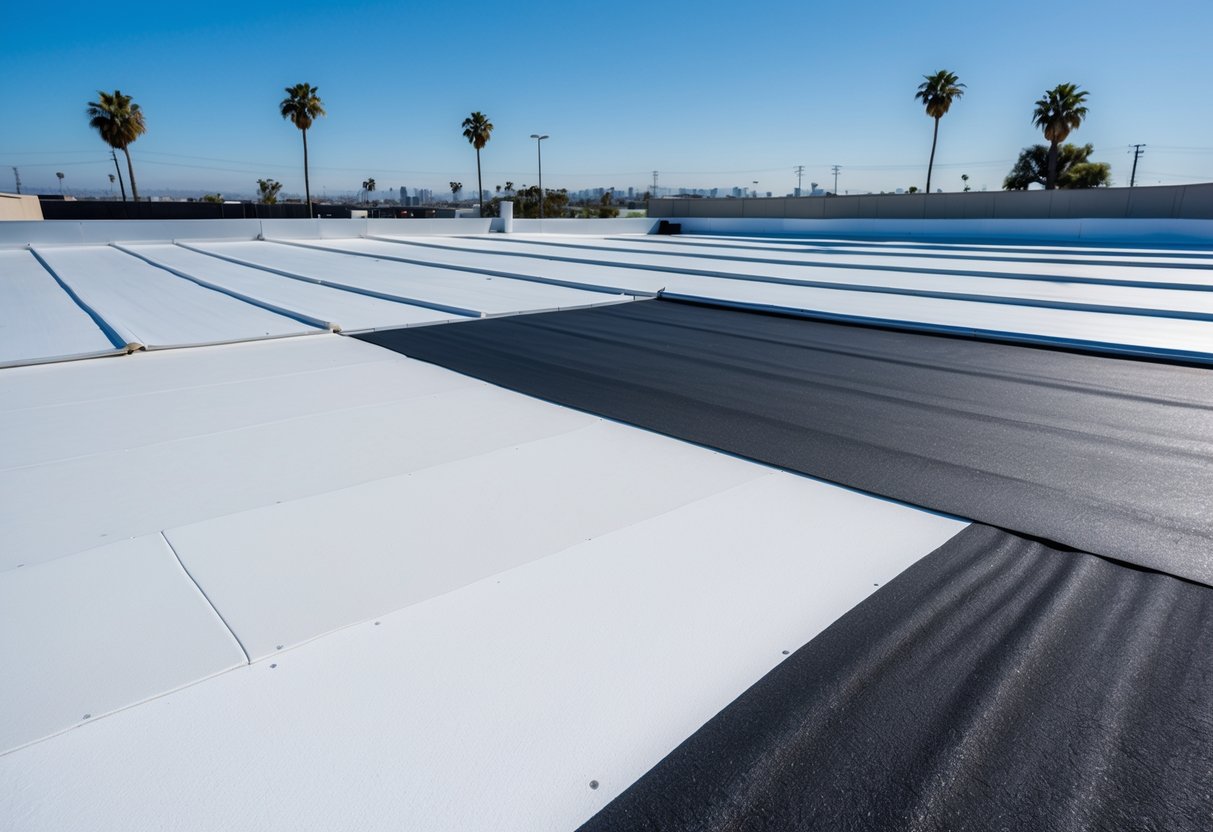
Each roofing membrane uses different chemical compounds that affect performance and durability. The installation methods vary significantly between heat-welded systems and adhesive applications, while lifespan expectations range from 10 to 30+ years depending on the material chosen.
Material Composition and Properties
TPO (Thermoplastic Polyolefin) combines polypropylene and ethylene-propylene rubber polymers with added fillers. This thermoplastic material softens when heated and hardens when cooled.
TPO roofing offers excellent energy efficiency with its white reflective surface. However, it can lose up to 40% of its reflectivity within three years in unwashed conditions.
EPDM (Ethylene Propylene Diene Monomer) is a synthetic rubber made from oil and natural gas. The material contains carbon black, which provides superior UV resistance and flexibility.
EPDM roofing maintains flexibility even in extreme temperatures. Its black color absorbs heat rather than reflecting it, which can increase cooling costs.
PVC (Polyvinyl Chloride) roofing combines chlorine from salt and ethylene from natural gas. Manufacturers add plasticizers to increase flexibility from its naturally rigid state.
PVC roofing provides exceptional chemical resistance and handles most industrial chemicals without degradation. The material offers superior puncture resistance with breaking strength exceeding 350 pounds per square inch.
Installation Methods and Seaming Techniques
Heat-Welded Seams are used for both TPO roofing and PVC roofing systems. Hot air melts overlapping membrane pieces together to create watertight bonds.
These heat welding techniques produce seams stronger than the surrounding membrane material. The welded connection allows for thermal expansion and contraction with the building structure.
EPDM Roofing requires different installation methods. Contractors use adhesives or seam tapes to join membrane sections together.
This adhesive approach makes EPDM more vulnerable to seam failures over time. UV exposure can cause the roofing membrane to shrink and pull away from edges and flashings.
Thickness Options affect installation complexity:
- EPDM: 45-mil to 90-mil for commercial applications
- TPO: 60-mil to 90-mil recommended for warehouses
- PVC: 60-mil to 80-mil standard thickness
Thicker membranes provide better puncture resistance but require more specialized installation equipment.
Longevity and Durability
EPDM Roofing systems have proven reliable for over 20 years in commercial applications. The synthetic rubber maintains flexibility through freeze-thaw cycles without cracking.
Seam failures typically occur within 5-10 years due to adhesive breakdown. Regular maintenance can extend system life beyond 25 years.
TPO Roofing offers 10-15 year lifespans with proper maintenance. The material can degrade under high heat and UV exposure in sunny climates.
Membrane shrinkage, blistering, and cracking are common issues after prolonged sun exposure. Quality installation and annual inspections help maximize performance.
PVC Roofing provides the longest service life, lasting up to 30 years. The material resists ponding water better than other single-ply membranes.
Cold weather can make aging PVC brittle and prone to punctures. However, the chemically welded seams maintain waterproofing even under stress.
Performance Comparison:
- EPDM: Excellent cold weather flexibility, vulnerable seams
- TPO: Good initial performance, heat degradation concerns
- PVC: Superior chemical resistance, longest lifespan
Performance Factors in LA Climate
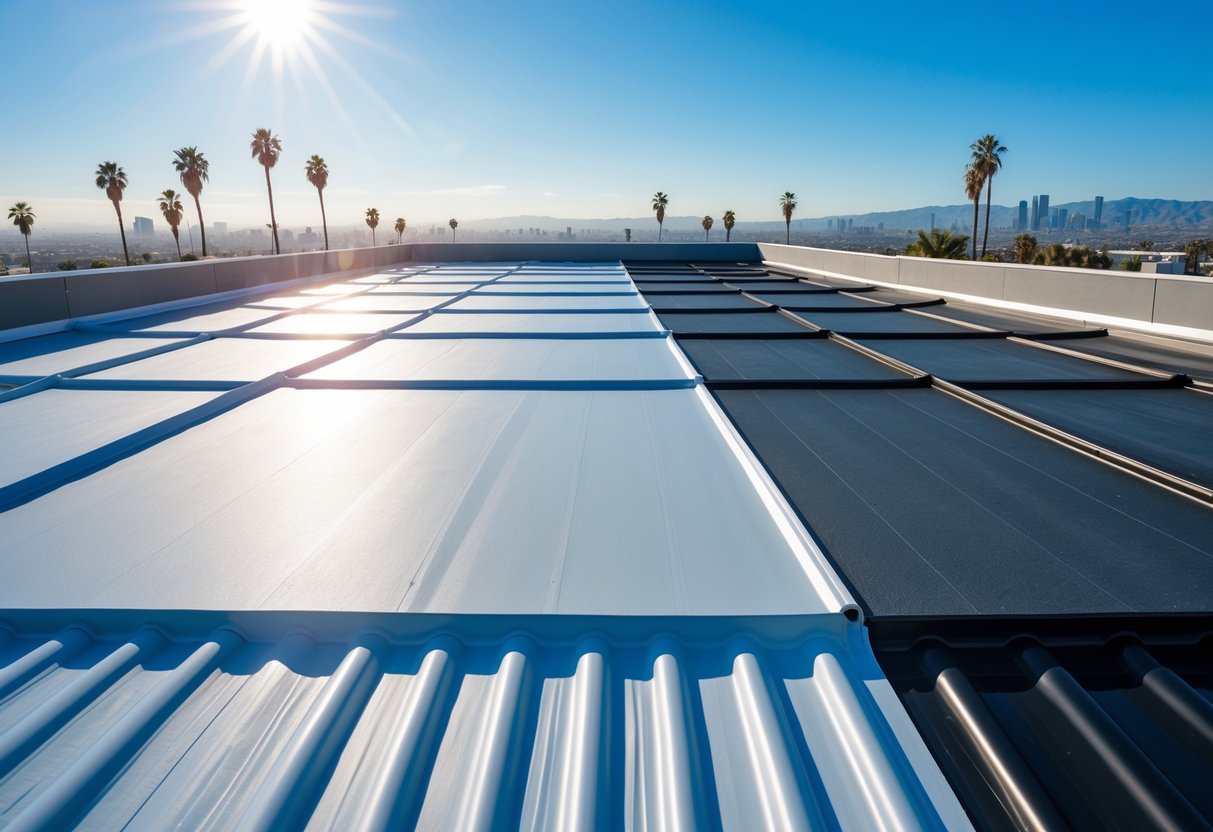
Los Angeles warehouses face intense UV radiation, high temperatures, and urban air pollutants that test roofing materials differently than other climates. TPO, EPDM, and PVC each respond uniquely to these specific environmental challenges.
UV and Heat Resistance
TPO shows mixed performance in LA’s intense sun exposure. The white surface reflects sunlight well initially. However, TPO can deteriorate from high heat and UV exposure over time. Industrial areas cause unwashed TPO roofs to lose about 40% of their reflectivity within three years.
EPDM contains carbon black that provides excellent UV resistance for decades. The material stays flexible even under extreme temperatures. The black color absorbs heat instead of reflecting it, which creates higher cooling costs for warehouses.
PVC performs best in high-heat conditions like LA. These membranes resist punctures and maintain strength under extreme heat. PVC has both Energy Star and Cool Roof ratings. The highly reflective surface cuts cooling costs while staying durable under constant sun exposure.
Energy Efficiency and Reflectivity
Reflective properties make a big difference in warehouse cooling costs. PVC membranes offer the highest reflectivity and maintain it longer than other options. This leads to lower energy bills during LA’s hot months.
TPO starts with good reflectivity but loses effectiveness quickly. The thermoplastic material softens in high heat, which affects long-term performance. Energy savings decrease as the surface becomes less reflective over time.
EPDM absorbs heat due to its dark color. Warehouses with EPDM roofs typically see higher cooling costs. The material’s durability doesn’t offset the energy efficiency disadvantage in hot climates.
Chemical and Weather Resistance
LA’s urban environment exposes warehouse roofs to various chemicals and pollutants. PVC handles chemicals better than EPDM and TPO. Most industrial chemicals don’t affect PVC membranes, making them perfect for warehouse applications.
TPO absorbs greases and oils, which leaves permanent stains. Certain chemicals can weather TPO faster than normal. This becomes problematic near industrial areas or airports.
EPDM offers moderate chemical resistance. UV exposure can cause the membrane to shrink and pull away from edges over time. The adhesive seams become vulnerable as the material ages in LA’s climate conditions.
Cost and Maintenance Considerations
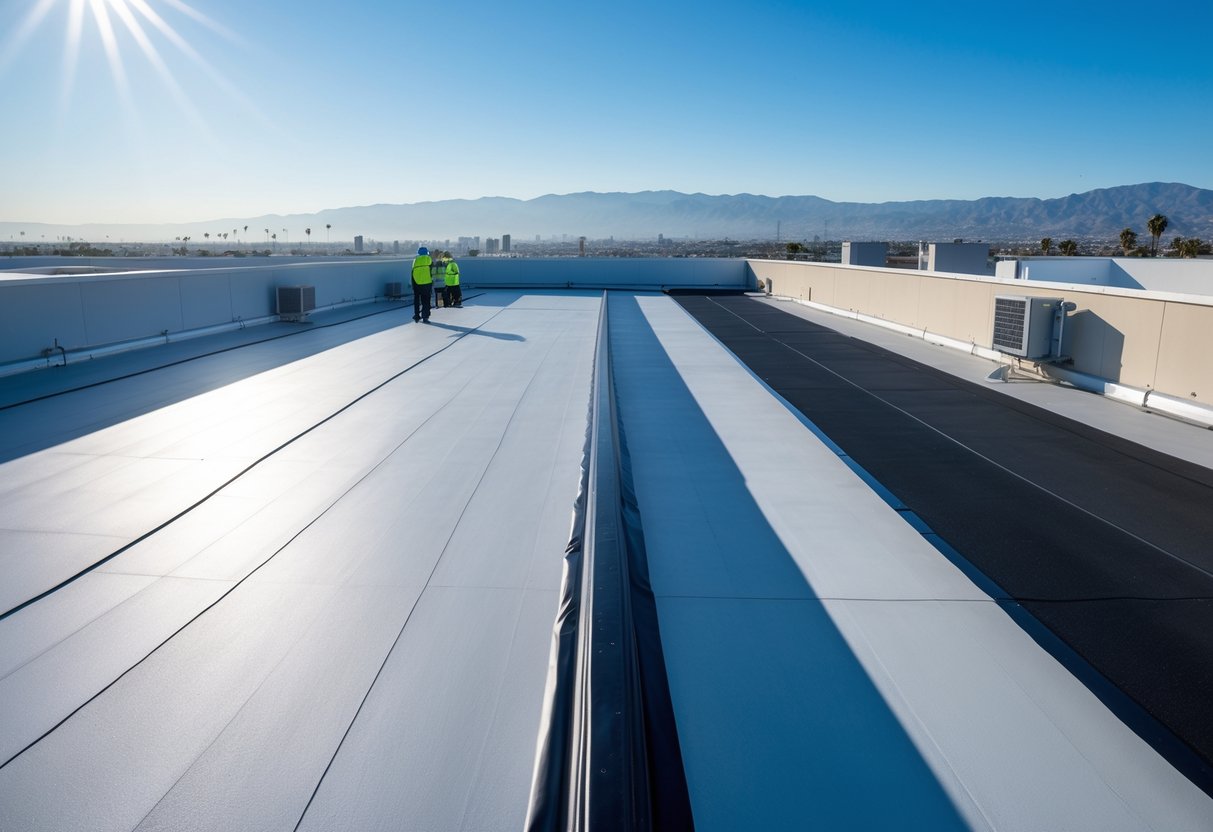
TPO roofing typically costs less upfront but requires more frequent repairs, while PVC roofing demands higher initial investment with superior long-term durability. EPDM roofing falls between these options with moderate costs and reliable performance for LA warehouse applications.
Initial Investment and Long-Term Costs
EPDM roofing costs between $7.50 and $12.50 per square foot for installation on flat roofs. This translates to $11,250 to $18,750 for a typical 1,500 square foot warehouse section.
TPO roofing offers the lowest upfront costs among the three options. Property owners can expect savings of 15-20% compared to PVC systems during initial installation.
PVC roofing requires the highest initial investment but provides better long-term value. The superior durability and chemical resistance justify the extra expense for many warehouse operations.
Energy costs affect long-term expenses significantly in LA’s warm climate. PVC and TPO’s reflective surfaces reduce cooling costs compared to EPDM’s heat-absorbing black surface.
Thicker membranes cost more initially but extend roof lifespan. 60-mil membranes perform better than 45-mil options for warehouses with regular foot traffic or equipment installations.
Maintenance Needs and Repairability
EPDM roofing requires inspections twice yearly, with seam maintenance being the primary concern. Adhesive seams typically fail within 5-10 years and need professional repair to prevent water damage.
TPO roofing needs annual professional inspections plus additional checks after severe weather. The membrane can develop shrinkage, blistering, and cracking from UV exposure in LA’s sunny climate.
PVC roofing requires bi-annual inspections focusing on flashings and penetration areas. The heat-welded seams resist failure better than adhesive systems used in EPDM installations.
Common repair costs vary significantly:
- EPDM seam repairs: $8-15 per linear foot
- TPO membrane patches: $12-20 per square foot
- PVC flashing repairs: $15-25 per linear foot
Professional maintenance adds 5-10 years to TPO lifespan and prevents major failures across all membrane types.
Lifespan and Warranty
EPDM roofing systems last 20+ years with proper maintenance. The synthetic rubber composition provides excellent flexibility and UV resistance through decades of service.
TPO roofing typically lasts 10-15 years but shows degradation from heat exposure in warm climates. The Midwest Roofing Contractors Association warns about potential durability issues in high-temperature environments.
PVC roofing offers the longest lifespan at up to 30 years. The superior chemical resistance and heat performance make it ideal for LA warehouse applications.
Warranty coverage varies by manufacturer and thickness:
- EPDM: 10-20 year warranties standard
- TPO: 10-15 year coverage typical
- PVC: 15-20 year warranties common
Thicker membranes receive longer warranty periods. Professional installation and regular maintenance are required to maintain warranty coverage across all three roofing types.
Choosing the Best Flat Roof for LA Warehouses
The hot, sunny climate of Los Angeles creates specific challenges for warehouse roofing systems that require careful material selection. Budget constraints, energy costs, and building usage patterns all play crucial roles in determining whether TPO, EPDM, or PVC offers the best long-term value.
Key Factors to Weigh for Los Angeles Facilities
Climate Considerations Los Angeles warehouses face intense UV exposure and high temperatures year-round. TPO and PVC both offer superior UV resistance compared to EPDM.
White TPO membranes reflect up to 85% of solar heat. This reduces cooling costs significantly in LA’s warm climate.
Energy Efficiency Requirements Energy efficiency becomes critical with rising utility costs. TPO provides excellent reflectivity at the lowest upfront cost.
PVC offers the highest energy performance but costs 20-30% more than TPO. EPDM typically comes in black, absorbing more heat and increasing cooling demands.
Budget Analysis Warehouse owners must balance initial costs with long-term savings:
- TPO: $4-7 per square foot installed
- EPDM: $3-6 per square foot installed
- PVC: $6-10 per square foot installed
TPO delivers the best cost-to-performance ratio for most LA warehouse applications.
Suitability for Warehouses with Specific Needs
High-Traffic Roofs Warehouses with frequent roof access need durable materials. PVC handles foot traffic and equipment installation better than TPO or EPDM.
Distribution centers with HVAC units benefit from PVC’s puncture resistance. The material maintains integrity around mechanical equipment.
Chemical Exposure Food processing or manufacturing warehouses may encounter chemical exposure. PVC resists oils, grease, and many industrial chemicals.
EPDM performs well with some chemicals but degrades when exposed to oils. TPO offers moderate chemical resistance for general warehouse use.
Large Roof Areas Expansive warehouse roofs benefit from TPO’s heat-welded seams. The welding process creates watertight joints across large areas.
EPDM uses adhesive seams that may fail over time on large roofs. PVC welding works well but costs more for extensive square footage.
Decision-Making Checklist
Immediate Priorities
- Determine maximum budget per square foot
- Identify any chemical exposure risks
- Assess roof access frequency
- Calculate current cooling costs
Long-Term Considerations
- Factor in 15-20 year energy savings
- Consider maintenance requirements
- Evaluate warranty coverage
- Plan for future building modifications
LA-Specific Factors Building owners should prioritize UV resistance and energy efficiency. TPO meets both requirements at reasonable costs for most warehouse applications.
Facilities with special needs may justify PVC’s higher cost. EPDM works only when budget constraints outweigh energy efficiency concerns.
The flat roof choice impacts operating costs for decades. Proper material selection reduces both energy bills and commercial roofing maintenance expenses.
Frequently Asked Questions
Warehouse owners in Los Angeles face unique challenges when selecting flat roofing materials. TPO, EPDM, and PVC each offer distinct advantages in durability, cost, energy efficiency, and maintenance requirements for commercial applications.
What are the primary differences in durability between TPO, EPDM, and PVC roofing materials?
EPDM roofing systems provide proven reliability for over 60 years and typically last 20+ years. The synthetic rubber material maintains flexibility in extreme temperatures and resists UV damage through carbon black composition.
TPO represents newer technology with a shorter track record. Most TPO installations last 10+ years, though proper maintenance can extend this to 15-20 years.
PVC roofing offers the longest lifespan at up to 30 years. The material demonstrates superior breaking strength at 350 pounds per square inch, well above the industry minimum of 200 pounds.
Seam durability varies significantly between materials. PVC and TPO use heat-welded seams that become stronger than the membrane itself. EPDM relies on adhesives or tapes, making seams more vulnerable as the roof ages.
How do the installation costs of TPO, EPDM, and PVC roofs compare for large-scale projects?
TPO typically offers the most economical installation costs for warehouse projects. The material gained popularity over 20 years due to its cost-effectiveness and energy efficiency benefits.
EPDM installation costs fall in the middle range. The material requires adhesive application, which can add labor time compared to mechanically attached systems.
PVC commands the highest upfront investment. The superior chemical resistance and extended lifespan often justify the additional cost for commercial warehouse applications.
Large-scale projects benefit from economies of scale with all three materials. Warehouse installations over 10,000 square feet can reduce per-square-foot costs significantly.
Can you explain the energy efficiency benefits of each roofing material in high-temperature environments?
TPO’s white reflective surface provides excellent initial energy savings. The membrane reflects sunlight effectively, reducing cooling costs in hot climates like Los Angeles.
EPDM’s black surface absorbs heat rather than reflecting it. This characteristic can increase cooling costs in warm environments, though the material maintains structural integrity under heat stress.
PVC membranes earn both Energy Star and Cool Roof ratings. The highly reflective surface cuts cooling costs while maintaining durability under extreme heat conditions.
Reflectivity performance changes over time. TPO roofs lose approximately 40% of their reflectivity within three years without proper maintenance in industrial environments.
Which flat roofing material offers the best resistance to UV radiation and ozone for warehouses in Los Angeles?
EPDM provides exceptional UV resistance through its carbon black composition. The material withstands ozone exposure and maintains flexibility for decades under intense sunlight.
PVC demonstrates strong UV performance with built-in stabilizers. The material resists degradation from Los Angeles’ high UV exposure levels effectively.
TPO includes UV inhibitors but shows vulnerability to degradation from combined heat and UV exposure. The Midwest Roofing Contractors Association has noted concerns about TPO performance in high-UV environments.
Los Angeles’ intense sunlight and ozone levels make UV resistance critical for warehouse roofing. EPDM and PVC both offer superior long-term performance under these conditions.
What maintenance considerations should be taken into account when choosing between TPO, EPDM, and PVC roofing?
EPDM requires inspections twice yearly, typically in spring and fall. Seam maintenance becomes critical as adhesive bonds can fail within 5-10 years after installation.
TPO needs annual professional inspections with additional checks after severe weather events. Proper maintenance can extend roof life by 5-10 years beyond standard expectations.
PVC systems benefit from bi-annual inspections focusing on flashings and penetrations. Cold weather can make aging PVC brittle, requiring careful monitoring.
All three materials need professional maintenance for warranty compliance. DIY repairs often void manufacturer warranties and can cause additional damage to warehouse roofing systems.
How do TPO, EPDM, and PVC flat roofs perform in terms of waterproofing and longevity in coastal climates?
Coastal environments like Los Angeles present unique challenges through salt air exposure and temperature fluctuations. PVC demonstrates superior performance in these conditions with chemically welded seams that resist moisture penetration.
EPDM performs well in coastal climates but requires attention to seam integrity. Salt air can accelerate adhesive deterioration, making regular maintenance essential.
TPO shows mixed performance in coastal areas. The material’s thermoplastic properties can be affected by temperature cycling common in coastal environments.
Ponding water resistance varies significantly between materials. PVC handles standing water better than TPO or EPDM due to superior seam technology and chemical resistance properties.